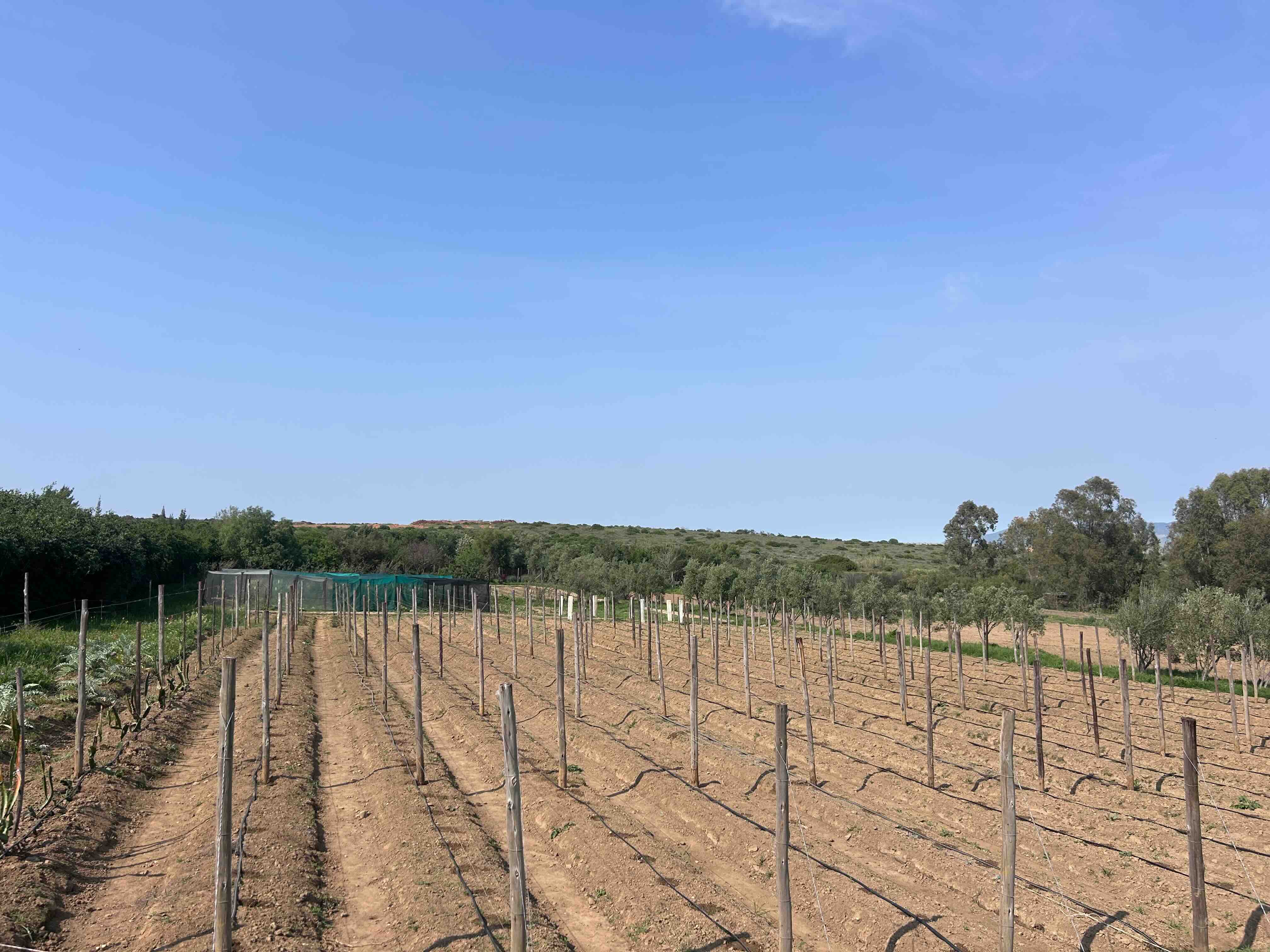
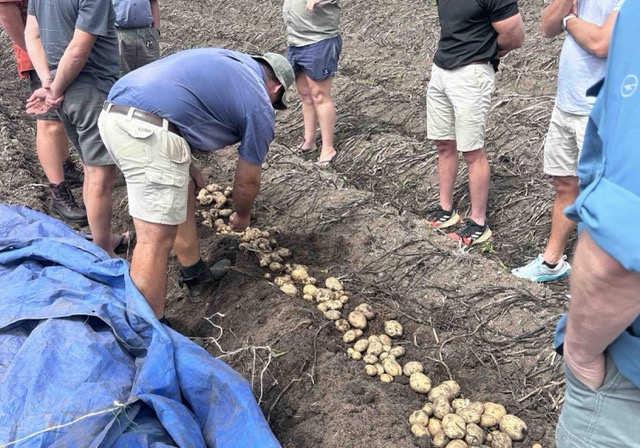
.png)
Past, Present, and Future of Regenerative Agriculture in South Africa
Regenerative farming is not new in South Africa. Justin Platt traces it from Iron Age terraces to the farmers teaching each other today.
Table of Contents

After university, Justin Platt worked for a large company manufacturing synthetic fertilisers and pesticides. Having grown up on a farm himself, he knew what a living farm should look like and began reflecting on that image.
“Your farm is alive; from your tiny little insects all the way through to the bird life, an antelope, and so on. Things that live naturally are abundant. So why am I spending so much time working to kill things?”
Justin is now CEO of RegenZ and Zylem, and he defines regenerative agriculture as “the form of food production that leaves, especially the soil, but the world, in a better place.”
In South Africa, the story of regenerative agriculture is rooted in the river valleys and hillsides of early farming communities, was shaped by the World War II boom in industrial agriculture and lives on in modern farmers who teach one another how they can restore their land.
Here is how Justin sees the past, present, and future of regenerative agriculture in the country.
Regenerative Agriculture’s Past
WWII triggered a surge of global agricultural demand and introduced technology that scaled up industrial inputs such as fertilisers and pesticides. The climate and soils in South Africa do not naturally support the large-scale agriculture that was demanded by the war. To coax commercial-size crops from their soils, farmers grew reliant on chemical inputs and the companies that produce them.
However, it is the same synthetic fertilisers, pesticides, and land exploitation that degrade soil health over time if overused.
Justin explained that in his view, big multinational companies were focused on the technology that was moving ahead and how they could compete in the race.
“They weren’t concerned about it [the soil’s health] because their business was finding a solution to the problem that they created, which was depleting the microbial biomass in the soil through the advent of synthetic fertilisers. When that starts affecting your soil, then you just correct it because now you’re getting more pests and diseases. Well, if you’re getting more disease, then they’ve got something to control that too.”
Justin explained that things started to change about thirty or forty years ago as farmers noticed the trap that they were in.
“They wanted to get off the commercial multinational grip or treadmill; the only way they could do that was to take things into their own hands and become less reliant on them. And the only way to do that is to improve your soil by improving organic carbon.”
This meant reverting to practices that improved their soil’s organic carbon without adding harsh fertilisers. Farmers returned to a handful of regenerative agriculture practices:
- Minimise soil disturbance through no-till or low-till practices.
- Maintain permanent soil cover with cover crops.
- Integrate diverse crop rotations to break pest and disease cycles.
- Incorporate managed livestock grazing to mimic natural ecosystem dynamics.
- Build soil biology through compost, microbial inoculants, and bio-stimulants rather than synthetic chemistry.
Regenerative Agriculture’s Deeper Roots in the Country
The story of modern regenerative agriculture is about learning to restore depleted soil. However, its roots stretch back further than that.
The regenerative practices weren’t new ideas; they were traditional farming practices that existed long before a remedy for synthetic fertiliser damage was needed. From indigenous farmers in the Americas to Bantu-speaking people here in South Africa, regenerative agricultural practices have served soils throughout history.
Bantu-speaking people who migrated to southern Africa brought a variety of crops and animals with them. Archaeological research of the Iron Age points to farming practices that echo what we call regenerative agriculture today.
Early farming settlements were located in places like the Limpopo, Shashe, Crocodile, and Komati River valleys to utilise the rich soils and access to grazing. The farmers would stagger the crops at different stages of the flood cycle to take advantage of the different nutrient demands of the plants.
Farmers in Nyanga, Zimbabwe, and Bokoni applied terracing to prevent erosion and assist in the soil’s access to oxygen, water, and nutrients. Terraces in Bokoni were placed around homesteads so the nutrients from livestock could leach into the soil. Even household rubbish and domestic fire ash were disposed of on the terraces, which added organic matter. Farmers would clear land or deal with old crops by cutting and burning vegetation and adding it back to the soil. Evidence of this is found at Ndondondwane, an early archaeological site at the Thukela River in KwaZulu-Natal.
Archaeological evidence illustrates the continuous occupation of early farming sites such as KwaGandaganda and Ntshekane in the eastern part of the country, suggesting the farmers successfully managed soil fertility and avoided land degradation.
The farmers who had built this knowledge through generations of observations were removed from their land with the expansion of colonialism, laying the groundwork for apartheid. The legacy of land dispossession is visible on the country’s landscape.
These practices of feeding and maintaining the health of the soil were learned by the local people and mirror what we refer to as regenerative agriculture today. It shows how regenerative approaches have been woven into South African farming, commercial and smallholder alike.
The Present Moment of Regenerative Agriculture
While regenerative agriculture has been given a name and re-popularised, its modern dissemination cannot be pointed to one organisation or individual.
Justin questioned, “Was there any doyen that sort of came and enlightened everyone? I would say not.”
There are major names in the popularisation of regenerative agriculture, Robert Rodale and Allan Savory among the best known, but Justin instead credits farmers being educated or educating themselves on traditional practices to decipher what their soils really need.
Justin estimates that in the country:
“We’ve probably gone from an estimated 1% of farmers using regenerative agriculture to 10% over 30 years. I must add that I believe the percentage could be much higher, up to 25% or 30% of farmers who are aware that this is what they should be doing and would like to be doing it, but don’t necessarily have the wherewithal to do it.”
Justin doesn’t blame the farmers who have yet to adopt regenerative agriculture; when you put an investment into your land, you rely on it to produce. A farmer may need their crop to yield now, not later.
However, the health of the soil will determine if later is an option.
Justin notes that some farmers have proven what regenerative agriculture promises, that you can rebuild your soil, and it is those farmers that are able to teach others.
“Farmers learn from farmers.”
The Future of Regenerative Agriculture
There have been, and will continue to be, conferences, courses, books, and media about regenerative agriculture, many of which are written or taught by farmers themselves. It is via these channels of wisdom and experience sharing that the practice of regenerative agriculture will spread.
When I asked Justin what he believes the future of regenerative agriculture looks like, he noted the beneficial impact of technology. Now the 10% of farmers who have transitioned to regenerative agriculture can point to a soil test to prove that there is a positive change taking place below their boots.
Justin recognises that an obstacle to turning to regenerative agriculture is trusting that it will pay off. Adopting regenerative agriculture will not show a change overnight, but with soil testing, the farmers can trust that their land is improving.
“The farmer can say, ‘Well, that’s what my soil looked like five years ago, and this is where I am now. I’m moving in the right direction. Let’s keep on going.’ Then their neighbour farmer can come, have a look at that data and say, ‘Well, geez, if they’ve managed to do that next door, so can I.’”
If the farmers are able to change, that grassroots effort will eventually be a factor in swaying the industry in general.
“The consumer out there is very aware of the diseases like dementia and Alzheimer’s that have skyrocketed over the last thirty or forty years. If you start filling in the dots, what has changed over that period of time? Obviously, a factor is the way that food is processed, but also the advent of how the food is produced.”
“The very big companies who create damaging industrial practices now cannot afford to not be part of the effort to make the world a safer and better place. And therefore, they’re jumping onto the bandwagon.”
The soil in which your food grows is in direct contact with your body. Check out RegenZ’s recent blog post on the connection between gut health and soil health, written by my friend, Adelaide Dixon.
Where the customer goes, the company goes, towards healthy food production.
As our interview wrapped up, Justin acknowledged:
“I’ve been going back to the soil the whole time because in fact, it’s all about the soil.”
Past, present, and future. In the end, the story of regenerative agriculture comes back to the soil and how it can make the world a better place.
References
Delius, P., Maggs, T., & Schoeman, A. (2014). The arrival of farming, the growth of trade and links to the Indian Ocean world. In Forgotten world: The stone-walled settlements of the Mpumalanga escarpment (Ch. 2). Wits University Press.
Höhn, Alexa, Mushayikwa, Emmanuel, & Schoeman, M.H. (2023). Earth, Water, Air, and Fire: Thinking about Farming and Farmscapes. African Archaeological Review, 40. 10.1007/s10437-023-09542-9
Jan Vansina (1994). A Slow Revolution: Farming in Subequatorial Africa. Azania: Archaeological Research in Africa, 29-30:1, 15-26. DOI: 10.1080/0067270940951165
South African History Online. (2012, January 20). When, why and where the first African farmers settled in Southern Africa. South African History Online.
South African History Online. (2013, March 26). Land: dispossession, resistance and restitution. South African History Online. https://sahistory.org.za/ref/A-0095335
“Regenerative Organic Agriculture.” Rodale Institute, 29 Oct. 2020, rodaleinstitute.org/whyorganic/organic-basics/regenerative-organic-agriculture/
Meet Allan Savory, the Pioneer of Regenerative Agriculture, www.agriculture.com/livestock/cattle/meet-allan-savory-the-pioneer-of-regenerative-agriculture. Accessed 29 Sept. 2026.
About the Author

Follow on LinkedIn: