Seeing is Believing: Resilient Maize Goes to the Field
At 77, maize breeder Dr Mike Barrow is putting new disease-resistant hybrids into the ground across KwaZulu-Natal.
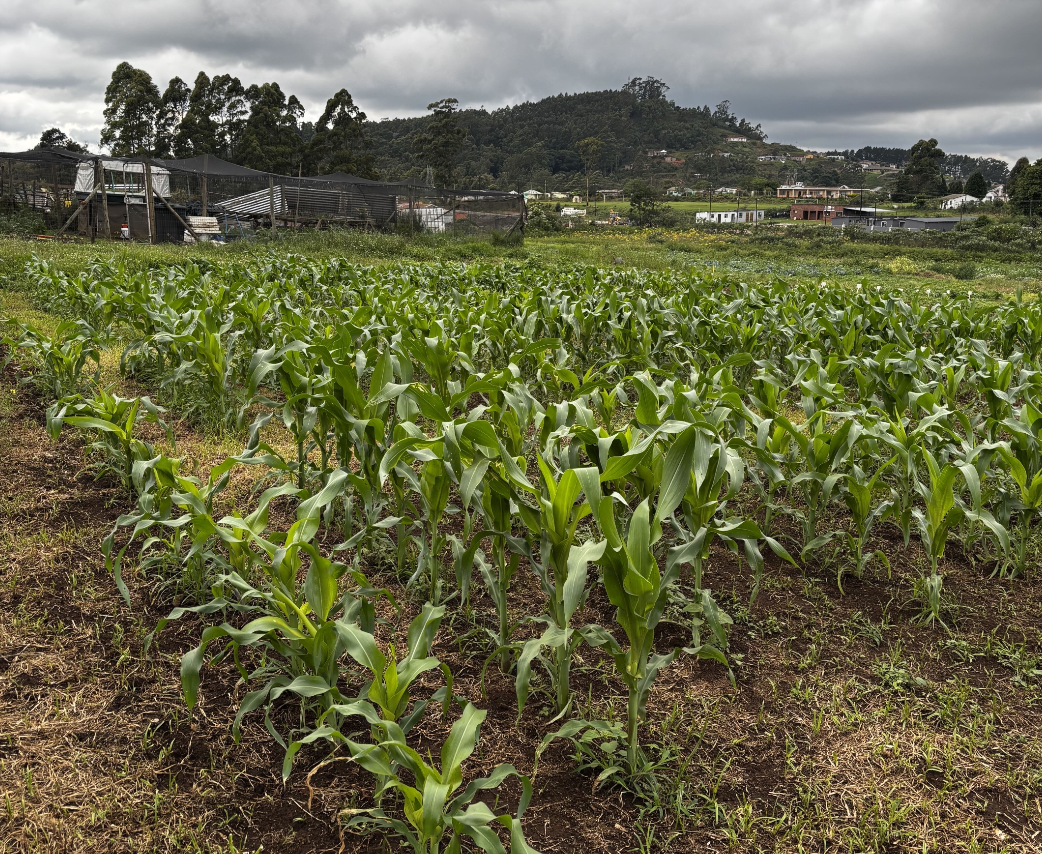
Table of Contents

Maize breeder Dr Mike Barrow spent 46 years developing hybrids at Pannar Seed Company and Lake Agriculture. At 77, he's still in the field. This season he's testing new disease-resistant maize hybrids and open-pollinated varieties (OPVs) on farms across KwaZulu-Natal.
The goal is simple: cheaper seed with natural resistance to leaf diseases, so farmers don't have to spray expensive, toxic fungicides.
Getting off the chemical treadmill
It now costs about R30,000 to plant a hectare of maize. Around 95% of high-yielding hybrid seed is controlled by a handful of large companies. It sells for up to R6,000 a bag and still needs about three fungicide sprays a season.
"I'm a pragmatic greenie," says Dr Barrow. "Sometimes you have to use chemicals, but if you can get away without using fungicides, life is a hell of a lot happier and cheaper."
Trials on every kind of farm
He started with about 60 hybrids and has narrowed them down to 25 to 28. These are now planted on a wide range of farms: South Africa's only fully organic milk producer in Karkloof, a regenerative farmer in Greytown, conventional commercial farms, and his first small-scale trial. By the end of the season, he hopes to pick the best few varieties for silage, grain and small-scale farmers.
Seed and soil
Resistant seed is only half the picture. On one trial farm, Dr Barrow has planted rows with and without fertiliser side by side. He wants to see whether some hybrids can still give small-scale farmers a decent crop without it.
That's where RegenZ comes in. Dr Barrow focuses on genetics, and RegenZ focuses on the soil. Its products meet a crop's short-term nutrition needs while building long-term soil health, and every programme starts with a soil test. RegenZ founder Justin Platt sees resilient genetics and regenerative soil practices as a natural fit, because together they cut both risk and cost for farmers of every size.
Seeing is believing
Dr Barrow knows brochures won't change minds. "Farmers need to see and feel crops, stand in a field, look at the plants," he says. He harvests and weighs every trial himself, usually with a cane knife and a milk scale. He'll also host field days so local farmers can walk the rows and judge for themselves. One young dairy farmer in Winterton is already asking to buy anything that doesn't need spraying.
What's next
A dry October followed by heavy November rain has delayed planting. Still, by March 2027 Dr Barrow expects to know which varieties work. After that, he plans to build up seed stock and work with smaller seed companies, independent agents and partners like RegenZ to get the varieties to farmers.
For commercial farmers, that could mean about three fewer sprays a season. For small-scale farmers, it could be the difference between a failed harvest and having enough to feed a family and sell the surplus.
We'll check back in next year to see which varieties made the cut.
About the Author

Alex Platt
Alex is Business Development Manager at RegenZ. He's inspired by the potential of regenerative farming and takes a special interest in the technology and products that are moving agriculture in a more sustainable direction.
Follow on LinkedIn: